
2015 Serendipity EFL ART CONTEST
A big thank to the students who participated in the first edition of Serendipity EFL Art Contest. Students from different semesters sent us two different pieces of artwork in which they tried to artistically represent the concept of 'serendipity'. The winner was chosen according to the following criteria: originality, creativity, the capacity of graphically represent an abstract concept as well as the spirit of our website and English learning style.
Let's have a look at the winner's piece of artwork and at the other drawings:
The winning logo
Artist: Camila Morales

Other drawings sent by the participants:
Artist: Camila Morales
Artist: Sebastian Tíjaro


Artist: Giseth Rodríguez


IDEAS FOR SOME INSPIRATION
Serendipity:
Origin of the word:
This neologism created in 1754 by the English writer Horace Walpole from the Persan fairy tale The Three Princes of Serendip. Serendip was an old Persan name for Sri Lanka Talking about the heroes of this tale, Walpole said that these princes were always making discoveries, by accidents and sagacity, of things they were not in quest of". Indeed, in this tale, these princes are always solving complicated problems by chance.
Famous examples:
-
The discovery of the New World by Christopher Columbus is a good example of serendipity. After many months on sea looking for the East Indies without results, his crew became impatient because there were no signs of land and they were running out of food and water. The sailors threatened mutiny. But happily they saw land some days later. Columbus thought they had arrived to East Indies but actually they had discovered a new continent.
-
While having a bath on his bathtub, Archimedes discovered accidentally that if an object is wholly or partially immersed in water, it is buoyed up by a force equal to the weight of the water displaced by the object. That's why ships keep afloat.
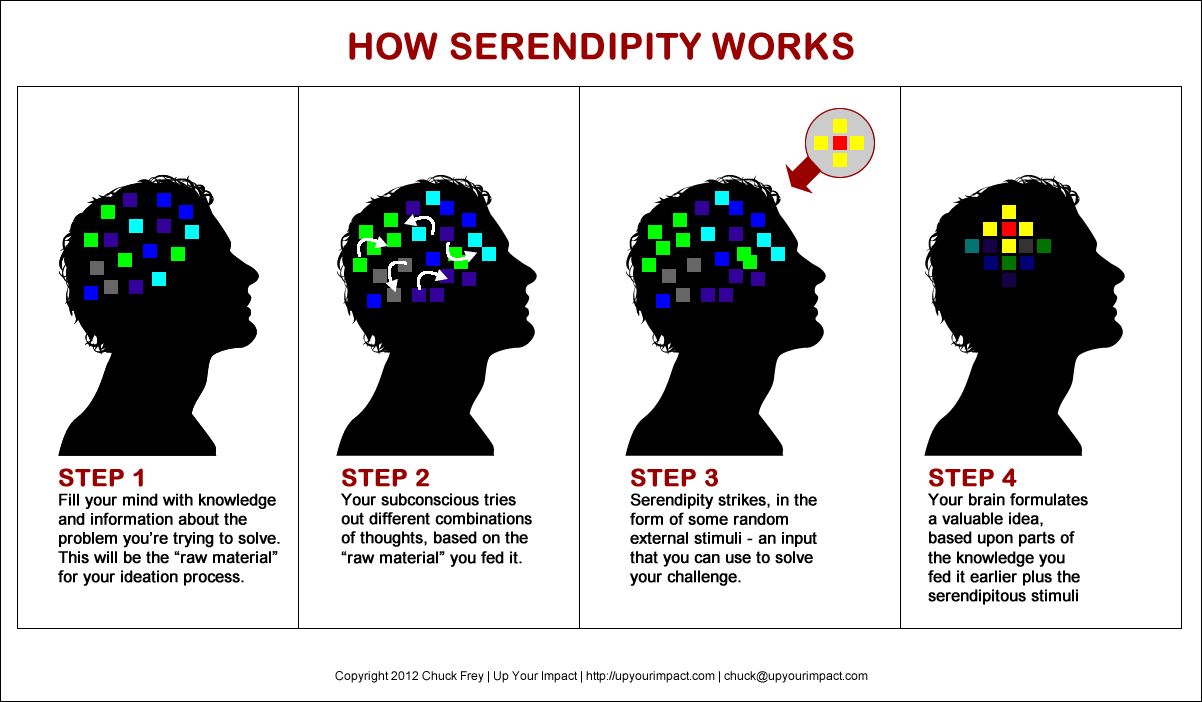
The idea hit me...
Serendipity also happens when you are trying to find a creative idea and unexpectedly an idea hits you, a good idea comes to your mind. This is how it works: according to adigaskell.org